
Understanding the Difference Between Emotions, Feelings, and Moods
- Carlotta Self Healing Clinic
- Understanding Feelings
Emotions, feelings, and moods are often used interchangeably, yet they represent distinct aspects of our emotional experience.
Learning how these 3 elements interact explains why some days feel unexpectedly heavy or why a small comment can provoke a strong emotional reaction. Emotional awareness is not about analysing every thought, it involves noticing what is happening inside and interpreting it in a grounded way.
Distinguishing between emotions, feelings, and moods makes it easier to respond thoughtfully to situations, improve relationships, and reduce internal stress.
Emotions: The Body’s Immediate Response
Emotions are instinctive, automatic reactions to events. They arise quickly and can appear before conscious thought. Emotions are short-lived but can be intense, and they frequently involve physical sensations such as increased heart rate, rapid breathing, or muscle tension.
Everyday examples:
Feeling a sudden jolt of irritation when someone cuts in line
Experiencing a surge of joy when reconnecting with an old friend
Feeling startled by a loud noise
These are all emotional responses, immediate, instinctive, and physically embodied. Emotions signal that something matters, rather than being problems that need to be fixed. They serve important functions: preparing the body for action, alerting us to opportunities or threats, and helping communicate inner experiences to others.
Key Features of Emotions:
Short-lived, typically seconds to minutes
Triggered by specific internal or external events
Often experienced physically before mental processing
Serve as signals, guiding attention and action
Recognising emotions as signals rather than threats allows for more intentional and effective responses, reducing impulsive reactions that can lead to regret or conflict.
Feelings: Interpreting Emotional Experience
Feelings develop after emotions. They represent the conscious interpretation of emotional signals, influenced by past experiences, beliefs, culture, and personal meaning. Feelings provide context and allow understanding of why a particular emotional reaction occurred.
For example:
Feeling fear when receiving an unexpected message from a manager may transform into worry, anxiety, or anticipation, depending on personal experiences and beliefs
A small compliment can trigger happiness, which may evolve into feelings of confidence or gratitude
Key Features of Feelings:
Last longer than emotions, often minutes to hours
Shaped by reflection, personal interpretation, and context
Provide insight into emotional experiences and guide decisions
Feelings connect raw emotional reactions to conscious understanding. They help identify emotional patterns and provide insight into triggers and strengths, enhancing personal growth and self-awareness.
Moods: The Emotional Backdrop
Moods are longer-lasting affective states that colour experiences over extended periods. Unlike emotions, moods are not necessarily triggered by a single event. Unlike feelings, moods don't always reflect conscious interpretation.
Examples of moods include:
A restless, irritable mood after poor sleep
Calm contentment following a walk in nature
A general sense of unease during stressful work periods
Key Features of Moods:
Long-lasting, from hours to days or weeks
Often have no clear trigger
Influence perception, thought patterns, and behaviour
Can be shaped by environment, lifestyle, and social interactions
Moods function like the weather for the mind. Recognising their temporary nature allows for navigation without becoming overwhelmed or reactive. Early identification of a low mood enables proactive self-care, such as engaging in restorative activities, adjusting routines, or spending time outdoors.
How Emotions, Feelings, and Moods Interact
Emotions, feelings, and moods are interconnected. An emotion can spark a feeling, and repeated feelings can influence moods. Awareness of these links allows conscious intervention, helping prevent negative cycles from dominating daily experience.
For example:
Frustration during a disagreement (emotion) can evolve into discouragement (feeling), which may contribute to a low mood if repeated over several days
Experiencing joy during social interaction (emotion) may lead to feelings of gratitude and connection, supporting a more positive mood over time
The following table summarises the key differences, making it easier to understand how emotions, feelings, and moods relate to each other:
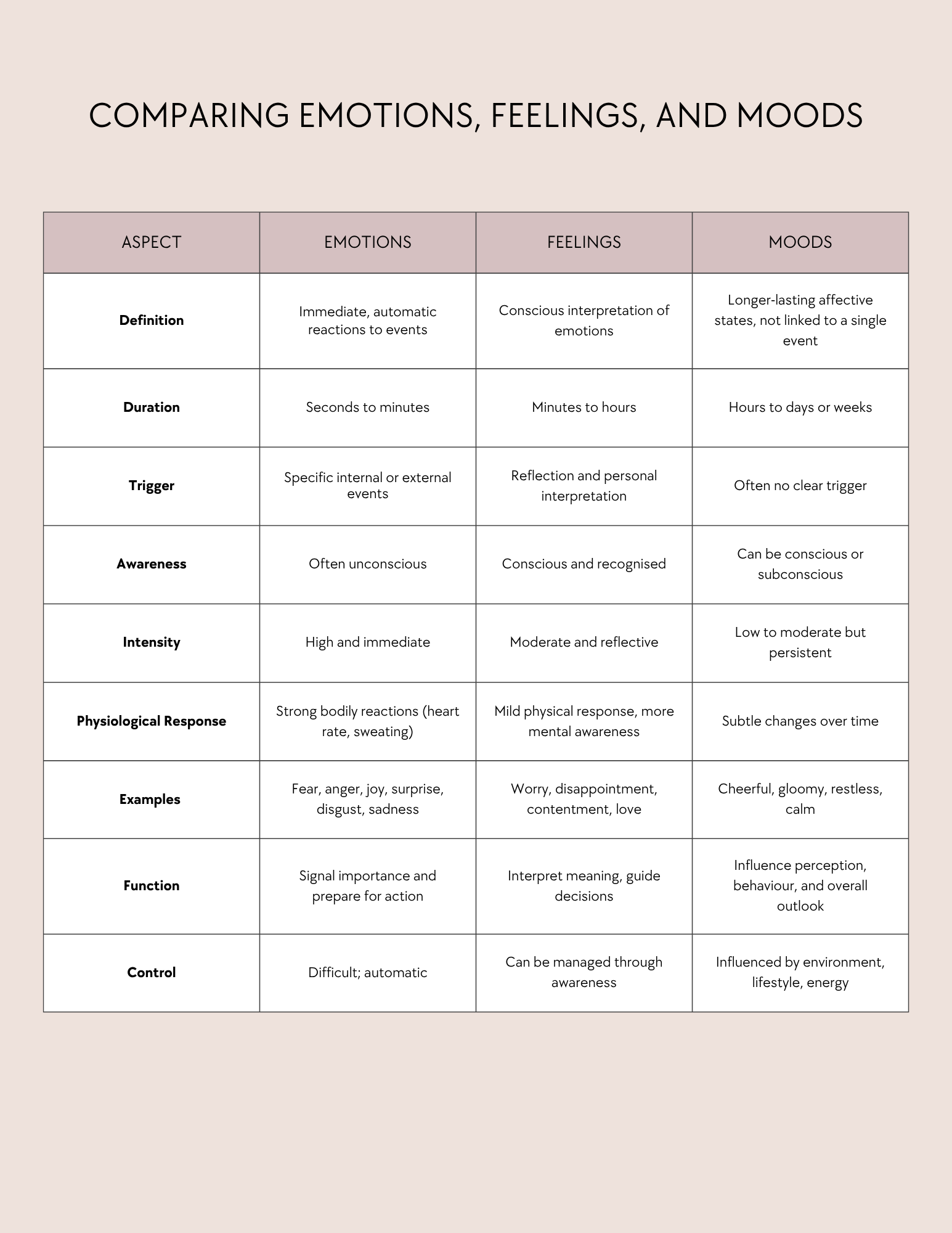
Observing these patterns enables thoughtful responses to emotional experiences, allowing emotional states to shift naturally and more healthily.
Practical Strategies for Emotional Awareness and Management
1. Pause Before Responding
Taking a brief pause when strong emotions arise creates space for reflection, helping to respond thoughtfully rather than react impulsively.
2. Name Your Emotions and Feelings
Labeling emotional experiences clarifies what is happening internally. Statements such as “I feel anxious” or “I feel disappointed” can cultivate awareness, perspective, and self-understanding.
3. Observe Patterns and Triggers
Identify recurring situations, people, or thoughts that provoke emotional responses. Recognising patterns reveals areas that may need attention, helping to manage emotional cycles effectively.
4. Listen to Your Body
Physical sensations often come with emotions. Tight shoulders, a heavy chest, stomach knots, or rapid heartbeat indicate that attention is needed for emotional responses.
5. Reflect and Process
Journaling, mindful walking, meditation, or quiet contemplation allow emotions and feelings to settle, promoting clarity and deeper insight into emotional patterns.
6. Adjust Your Environment
Light, sound, organisation, and exposure to nature influence mood. Small adjustments, such as tidying a workspace, playing soothing music, or stepping outside, can positively shift emotional tone.
7. Allow Emotions and Moods to Move
Emotions and moods are dynamic. Observing them and allowing them to pass naturally can help with regainin clarity.
8. Practice Self-Compassion
Being kind to yourself when emotions feel overwhelming encourages understanding and self-awareness. Recognising that emotional experiences are normal allows for grounded and balanced responses.
Integrating Emotional Awareness into Everyday Life
Developing awareness of emotions, feelings, and moods is a continuous process. Noticing what arises, understanding its significance, and responding thoughtfully allows for more grounded and intentional living.
Emotions provide quick, instinctive responses to significant moments
Feelings provide interpretation, meaning, and insight into those emotional signals
Moods provide the longer-term emotional backdrop, influencing perception and behaviour
Emotional awareness makes life more navigable. Responses become conscious rather than reactive, patience with emotional fluctuations increases, and understanding of internal experiences deepens. Practicing awareness of emotions, feelings, and moods builds resilience, strengthens relationships, and supports overall well-being.
If this exploration of emotions, feelings, and moods resonates with you, the "Feel to Heal" program offers a structured, reflective way to build on these insights. Through 21 carefully designed steps, you will learn to notice, understand, and embrace your emotions, develop greater self-awareness, and respond to life’s challenges with clarity and calm.
This self-paced program guides you through practical exercises, journaling prompts, and reflective practices that help you track your growth and uncover patterns in your emotional experiences. Whether you are new to emotional awareness or looking to deepen your understanding, "Feel to Heal" provides tools and guidance to support you every step of the way.
You can join the program at any time, work at your own pace, and revisit the steps whenever you need. Downloadable resources, like the Emotions Assessment Workbook, help you reflect and track your journey, making it a personalised experience that stays with you long after you complete the steps.
Join Feel to Heal here