What Your Relationships Reveal About Your Childhood and Attachment Style
- Carlotta Elle
- Childhood Work
Our earliest bonds with parents or primary caregivers leave a lasting imprint on how we connect with others. The experiences of those early years influence how we see ourselves, how safe we feel, and how we navigate relationships. They also shape our ability to create connections that feel supportive, nurturing, and fulfilling.
Children who grow up surrounded by consistent care, attention, and emotional responsiveness tend to feel worthy of love. They develop trust in others and a sense that the world is a place where relationships can be safe and rewarding. Conversely, children exposed to neglect, unpredictability, or emotional absence may grow into adults who doubt their value, struggle to trust, or feel uneasy in closeness with others.
Childhood teaches us not only about safety and connection, but also about emotions. A child encouraged to express feelings learns that emotions are valid and safe to share. A child raised in an environment where emotions are dismissed or criticised may carry that pattern into adulthood, finding it difficult to express needs or connect emotionally. These lessons are absorbed through the emotional tone of daily life rather than explicit teaching.
The 4 Attachment Styles and Their Impact
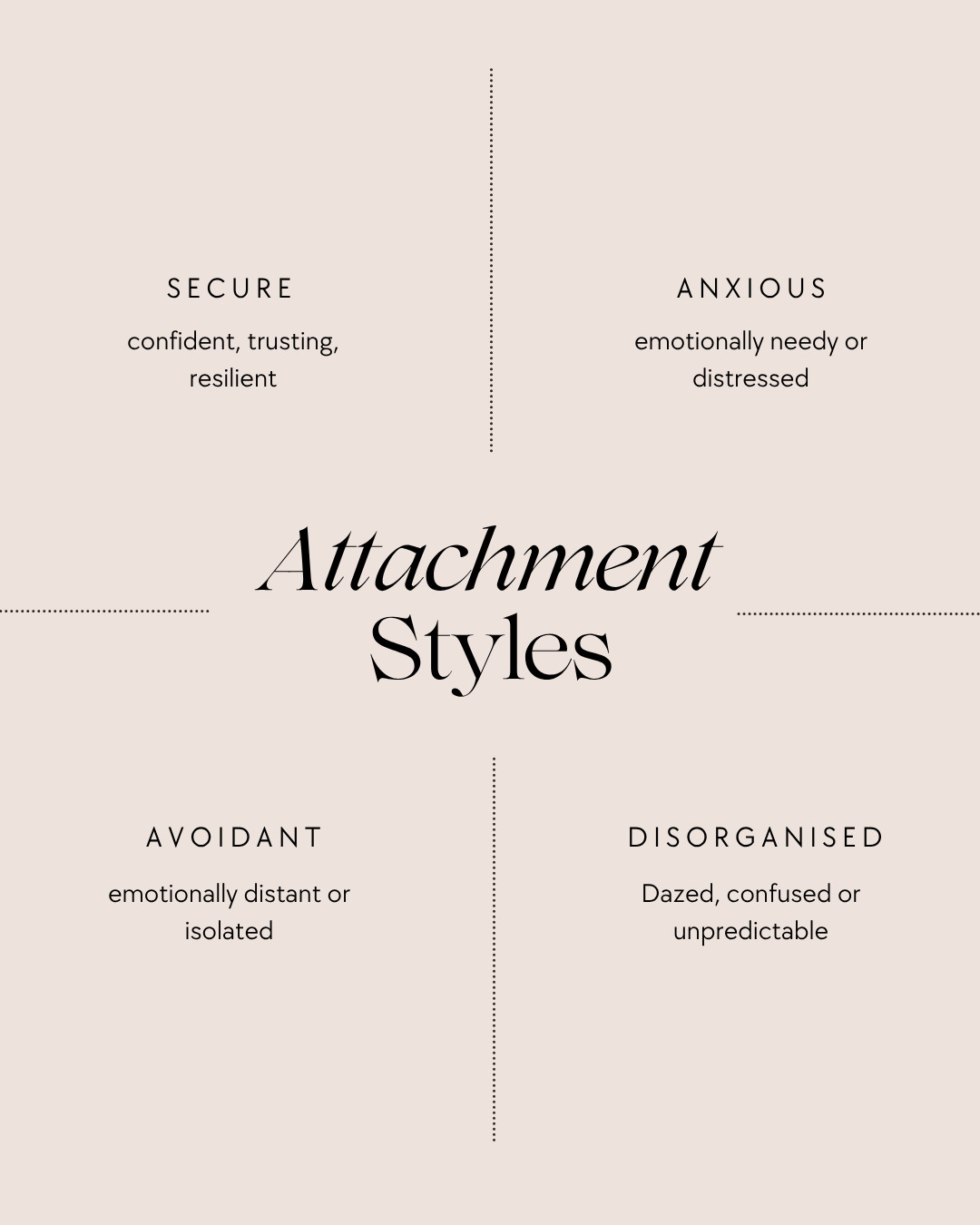
Secure attachment
Children who feel consistently supported and emotionally safe tend to grow into adults who trust themselves and others. They are comfortable with closeness and independence, can communicate their needs clearly, and manage conflict constructively. In adult relationships, they are likely to form partnerships based on mutual respect and honesty. Secure adults can enjoy emotional intimacy without fear, handle disagreements without escalating, and offer support while also asking for it when needed.
For example, they may calmly discuss disagreements without holding grudges, or offer help to their partner while also accepting help when offered.
Anxious-ambivalent attachment
Children who experience inconsistent care may grow up uncertain about whether they will be loved or protected. They may become clingy, seek reassurance, or worry that others will leave them. In adulthood, these patterns can look like frequent checking in with a partner, overthinking interactions, or reading too deeply into others’ actions for signs of rejection. People with this style may feel intense longing for connection while simultaneously fearing abandonment, creating cycles of anxiety and emotional turbulence.
For example, they may repeatedly text a partner for reassurance, or feel distressed if a partner spends time with friends without them.
Anxious-avoidant attachment
Children who learn that their needs will not be met may protect themselves by withdrawing or relying solely on themselves. As adults, they may struggle with intimacy, avoid expressing vulnerability, or feel uncomfortable when others get too close. Avoidant adults often prioritise independence over connection and may have difficulty trusting that others will be there for them. They may succeed professionally or socially but feel a persistent emotional distance in close relationships.
For example, they may decline invitations to share feelings with a partner, or resist asking for help even when overwhelmed.
Disorganised attachment
Children who experience fear, trauma, or unpredictability from caregivers may develop contradictory behaviours, unsure whether closeness is safe. Adults with disorganised attachment may fluctuate between seeking intimacy and pushing it away. They may feel intense fear of abandonment while simultaneously fearing closeness, leading to confusion, self-doubt, or difficulty regulating emotions. In relationships, they might oscillate between extremes, wanting connection yet feeling unsafe, struggling to maintain trust, and often replaying unresolved childhood fears.
For example, they may cling to a partner one moment and then withdraw abruptly the next, or misinterpret small disagreements as threats to the relationship.
How Childhood Experiences Show Up in Adult Life
Early experiences shape not only our relationships but also the way we navigate everyday situations, often in subtle ways. Here are some examples:
Someone who learned to rely on themselves because caregivers were inconsistent may struggle to ask for help at work or in friendships, even when support is available.
A person who grew up with emotionally unpredictable parents might feel anxious in social situations or hesitate to express their opinions for fear of judgment.
Those who experienced criticism or high expectations may overachieve or push themselves too hard to feel worthy, sometimes at the cost of rest or self-care.
A child who was taught to hide emotions may find it difficult to share feelings, even with close friends or partners, or may avoid conflict entirely.
People who felt overlooked as children may be hyper-aware of others’ moods, constantly trying to prevent disappointment or rejection.
Adults who experienced inconsistency in care may struggle with commitment, fearing that closeness will lead to hurt or disappointment.
Recognising how childhood shows up now helps create space for new ways of responding. With attention and practice, it is possible to cultivate more trust, confidence, and emotional ease in relationships.
Questions to Explore Your Relationship Patterns
Bringing awareness to your relationships can help you see how your childhood still speaks through them. These questions may support that reflection:
What emotions come up when I think about my relationships?
What needs were unmet in my childhood, and how do they show up now?
Do I believe I am worthy of love and care? If not, why?
What triggers me most often in relationships?
How do I treat myself when I feel rejected or criticised?
What would self-love look like for me today?
What boundaries do I need to put in place?
What do I long to say to the child or teenager I once was?
Healing Beyond the Past
Our childhood experiences are not something we can go back and change, but we can work on how they influence our present and our relationships today. Understanding your patterns, triggers, and attachment style helps you recognise the needs that were met and, importantly, the needs that were not. Even as adults, part of us still carries the beliefs, fears, and emotional pain from those earlier experiences.
The Inner Child and Teenage Healing Programme supports this process. Through guided reflections and exercises, it helps you connect with your younger self, become aware of unmet needs, and cultivate a nurturing, supportive relationship with yourself. This work builds a foundation of trust, safety, and emotional steadiness that carries into all areas of life.